Symmetrical transformers – passive systems for voltage symmetrisation
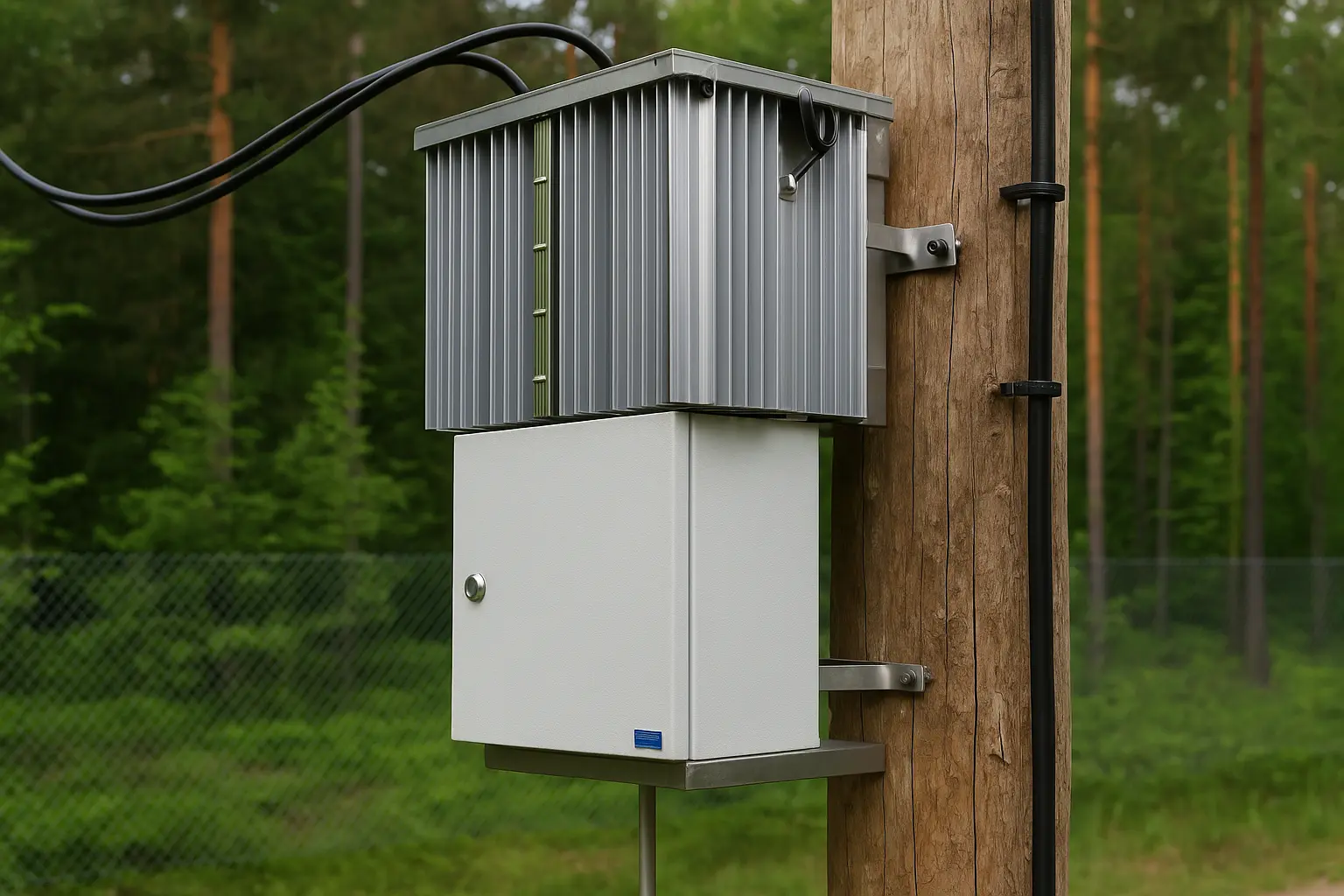 transformator-symetryzujący-1
Under ideal conditions, all voltages in a three-phase network would be uniform and symmetrical, ensuring stable and trouble-free operation of the system. In practice, however, networks rarely operate in this way. With the increase in the share of renewable energy sources, voltage and current imbalances arise, which must be controlled. Various technical solutions are used for this purpose, including symmetrical transformers, which help to maintain the balance and stability of the network.
The need for voltage symmetrisation
Modern low-voltage grids face increasing challenges, including the growing number of residential photovoltaic installations. On sunny days, they generate a surge in current. This, in turn, can cause voltage to rise above acceptable levels, especially when multiple installations are connected to the same phase. In some PV systems, installations are automatically disconnected from the grid in such situations, reducing their profitability.
Consumers are also experiencing phenomena leading to grid asymmetry. More and more households are using heat pumps, home electric car chargers, and numerous electrical appliances, which can cause uneven loads. To balance these loads and maintain grid stability, symmetrical transformers are used.
What are symmetrical transformers?
The main problem associated with current asymmetry is the flow of current in the neutral conductor, which leads to voltage fluctuations in the circuit and increases energy losses. To modify the properties of the current flow and improve network parameters, symmetrical transformers are commonly used in the power industry – passive systems that transfer electrical energy through induction. Depending on the needs, installation location, and network type, different types of symmetrical transformers are available. An example are special low-voltage transformers used in power systems below 1.1 kV.
When working with asymmetrical loads, transformers with appropriately selected windings are used. Such transformers, sometimes called as ‘zigzag’ transformers due to the arrangement of the windings, allow the voltage in the neutral conductor to be reduced and the current to be distributed evenly across the individual phases. As a result, the phase voltages have significantly less asymmetry, and in some cases, it is possible to eliminate it completely.
Other methods of voltage symmetrisation
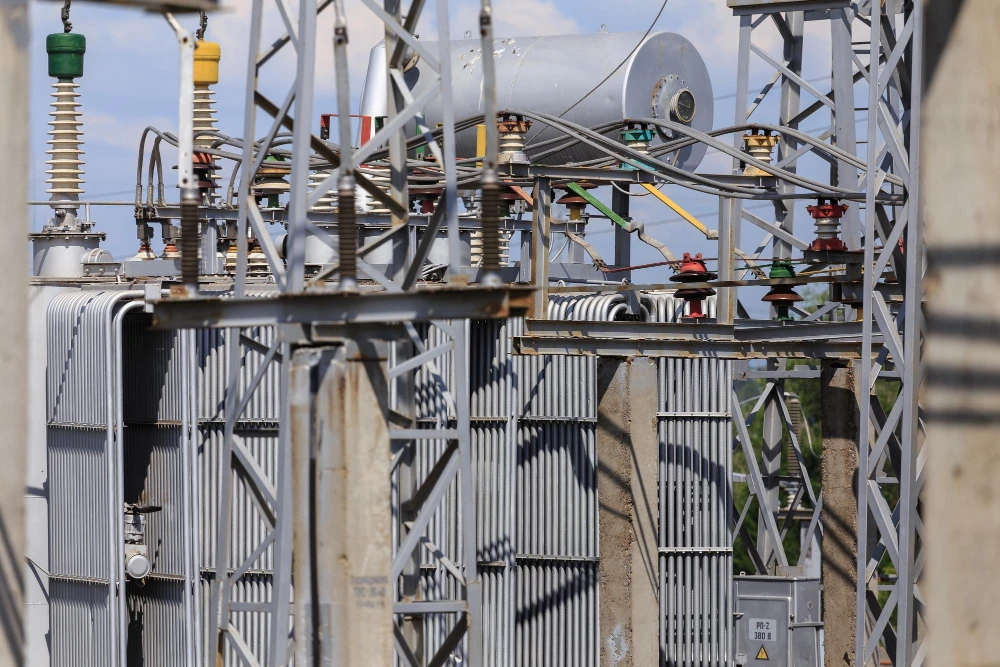
Another way to equalize voltages is to expand transformer stations. Transformer stations are responsible for supplying power with the appropriate parameters, and modernization can involve, for example, replacing transformers or line conductors with larger cross-sectional ones. However, this solution is expensive.
Power quality can also be improved through symmetrizing systems, which connect the symmetrical transformer to other devices or use other solutions. Additionally, automatic voltage regulators are used, which help distribute power evenly both within the grid and to consumers.
FAQ
Asymmetric voltage is a phenomenon occurring in a three-phase network, during which the voltage value or phase shift in at least one phase is different from the others and exceeds the permissible standards.
Current asymmetry can lead to an undesirable phenomenon, such as current flow in the neutral conductor with an increased single-phase current. This phenomenon causes energy losses and an increase in voltage at the customer’s connection point.
A symmetrical transformer is a device with a three-phase winding that is used to change the voltage value of the current flowing in order to reduce the load asymmetry in a three-phase low-voltage network.
The operation of a symmetrical transformer is based on the fact that the device, through the three-phase winding, takes part of the asymmetry current flowing through the neutral wire and, by phase shifting the currents, evenly distributes it to the individual phases, reducing the current asymmetry.
Solutions such as passive symmetrical transformers, modernisation of the distribution network and expansion of substations, symmetrical systems and automatic voltage regulators are used to symmetrise voltages.