Digital twins in the energy sector – a new approach to the design of substations and grids
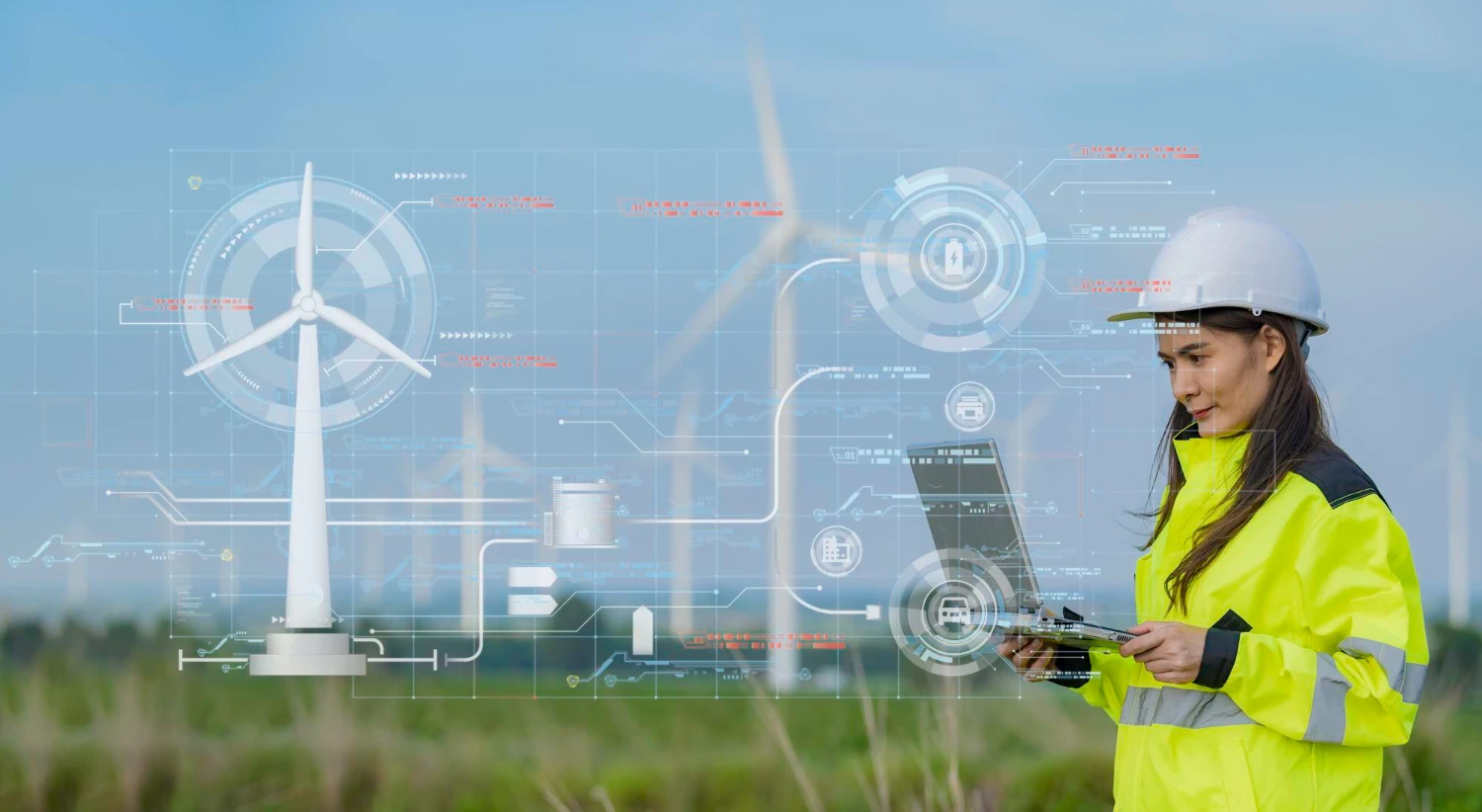 Digital twins
The energy sector is increasingly relying on data that is generated before the actual construction or detailed design phase. Thorough site surveys, up-to-date documentation, aerial photographs, 3D scans and information on existing equipment enable faster design, without guesswork and without costly corrections at a later stage.
In this context, a digital twin in the energy sector is a practical tool for organising data about a facility, which supports the design, construction and subsequent operation of infrastructure. It may relate to substations, power lines, connections, gas distribution points, renewable energy farms or an entire section of the electricity grid. It delivers the greatest value when it is not merely an attractive visualisation, but a database that supports design, construction and operational decisions.
Digital twin in the energy sector – what is it?
A digital twin is an accurate digital model of a real object, such as a substation, a cable line, an overhead line or a planned investment. It can be compared to a ‘technical 3D map’ showing the terrain, equipment, cables, structures, distances, collisions and key design data. As a result, the designer, investor and contractor do not have to rely solely on drawings, descriptions and separate files. They work on a single, up-to-date model of the project, can spot problems more easily before work begins, and can make decisions more quickly regarding the design, construction and subsequent operation.
A well-prepared digital twin of a power network organises information that, in a traditional process, is often scattered across maps, technical descriptions, tables, reports and photographs. The designer, contractor and investor can all work on the same view of the facility. Less time is spent explaining where the problem lies and more can be devoted to solving it.
In the Polish energy sector, the scale of investment is substantial. In its development plan for 2025–2034, Polskie Sieci Elektroenergetyczne (Polish Power Grid) outlines, amongst other things, 4,700 km of new 400 kV lines, 28 new substations and 110 modernised substations. Such projects require efficient coordination of data, documents, teams and deadlines[1].
From drawing to a digital working environment
Traditional documentation remains the basis of the investment process. The difference is that a digital twin in the energy sector allows us to view a project more broadly – as a system in which spatial, technical and organisational data complement one another.
In the case of substations, key factors include the distances between equipment, access routes, support structures, drainage, switchyard areas, cable routing, operational safety and space for future expansion. A 3D model of a substation helps to verify these aspects before work begins. It also facilitates cross-disciplinary collaboration, as it illustrates the spatial implications of design decisions.
For power grids, key factors include the route, land ownership, topography, obstacles, and intersections with roads, rivers and other networks. A digital twin of the power grid can support the analysis of alternative line routes, the selection of technology, and the assessment of locations where the greatest construction risks are likely to arise.
Data from the site before the teams arrived
Effective design begins with reconnaissance. 3D laser scanning, photogrammetric aerial surveys, geodetic measurements and site inspections are carried out in electrical power projects. These techniques provide an up-to-date picture of the site or project corridor, rather than merely a description based on archived maps.
LiDAR technology enables the acquisition of a point cloud from which the terrain geometry, elevations, obstacles, built-up features and existing infrastructure can be derived. This reduces uncertainty for the designer when analysing collisions, selecting equipment locations, planning access routes or assessing installation feasibility.
Drones operate in a similar way within the energy sector. They are effective for surveying power lines, substations, solar farms, hard-to-reach areas and locations where a rapid site visit would be time-consuming.
Alterga’s range of innovative services includes the use of drones, ground-based 3D scanning using LIDAR technology, spatial thermal imaging and smart energy management in storage facilities
Objects and routes in a single dataset
For an investor, it is important that the design of substations does not end with the preparation of drawings. The substation will subsequently be built, tested, commissioned, serviced and modernised. A digital model facilitates continuity between the design, the construction site and maintenance.
In renewable energy projects, the Grid Connection Point (GCP) is a key element. This is a facility used to receive energy from generation units – most commonly solar or wind farms – and then feed it into the distribution system.
Equally important is the design of power grids, particularly when the project involves overhead and cables lines. A digital model allows for the analysis of route alignment, points of conflict, terrain conditions, access routes and areas requiring further consultation.
Keep your maps, models and documents organised
A digital twin can benefit from various layers of information. GIS provides spatial data: plots of land, route alignments, approvals, area boundaries, the location of equipment, and the relationship between the investment and its surroundings. This is particularly useful when a project spans multiple locations or a long section of the network.
In turn, a BIM model helps to manage information about the facility: geometry, parameters, schedules, stages and the responsibilities of the various disciplines. In the energy sector, BIM need not mean merely a visually impressive model. What is more important is that the data is consistent, up to date and usable by subsequent teams.
Understood in this way, as-built documentation can become more than just a mandatory set of files upon completion of the project. If the data is organised from the outset, it is easier later on to carry out inspections, plan modernisations, analyse faults and prepare for subsequent stages of expansion.
Digital twin – fewer errors at the interface between industries
The greatest delays often occur where different areas overlap: design, administrative procedures, construction, supplies, surveying, automation, telecommunications, power engineering and environmental protection. A digital model does not eliminate all risks, but it helps to identify them at an earlier stage.
In design work, an approach whereby site data is analysed even before the concept is finalised works well. This allows for the comparison of alternatives, the identification of shortcomings, the anticipation of areas that will be difficult to construct, and the preparation of arguments for consultations.
Clarity is important for the contractor. The better the scope of works is described, the easier it is to plan equipment, work teams, deliveries and the sequence of works. For the client, control is key. Monitoring of the power infrastructure based on spatial data, photographs, measurements and reports provides a more reliable picture of progress than mere statements made during meetings.
From design to maintenance
A digital twin can support a project from the initial analyses right through to the subsequent operation of the facility. At the outset, it helps to compare different solutions, such as the route of a line, the location of equipment, the layout of substations, cable routing or the availability of service access routes. This makes it easier to assess which option will be safer, less prone to conflicts and simpler to implement. During the design phase, the digital model organises technical and spatial data; during construction, it facilitates the monitoring of changes against the documentation; and once the facility is operational, it can support inspections, diagnostics, and the planning of repairs and modernisation.
This is particularly important during the modernisation of existing substations and networks, where documentation is often incomplete and the actual condition of the facility differs from older drawings. A digital twin model reduces the risk of incorrect assumptions. It can also support training, workplace safety analysis and the preparation of maintenance tasks.
In larger grid structures, the digital model can be integrated with measurement data, monitoring systems and forecasts of power source output. Digital twins – detailed software models of physical systems – can help operators identify vulnerabilities, detect problems more quickly and test solutions without risking the operational grid.[2]
Renewable energy and digital twins
The development of renewable energy sources also requires careful planning of connections, substations, protection systems and control systems. The design of renewable energy projects does not end with selecting a site for a solar or wind farm. It is necessary to take into account connection conditions, power transmission methods, the operation of the distribution network, automation, communication, protection systems and the impact of the installation on the grid. A digital twin helps to bring all this information together in a single model, making it easier to assess how a new energy source will interact with the existing infrastructure.
Energy storage systems are also increasingly being incorporated into renewable energy projects as means of supporting stable plant operation and improving the management of the energy produced. Storage facilities regulate the operation of the installation, support the management of surplus generation and improve control over energy consumption and feed-in. Including the storage facility in the digital model allows for better planning of its location, connection, safety measures, cabling layout and subsequent operation.
A well-prepared power infrastructure for renewable energy sources requires more than just a single technical drawing. Data on the site is needed, cable routes, equipment, the operating conditions of the source, regulatory requirements, technical risks and the potential for future expansion of the installation.
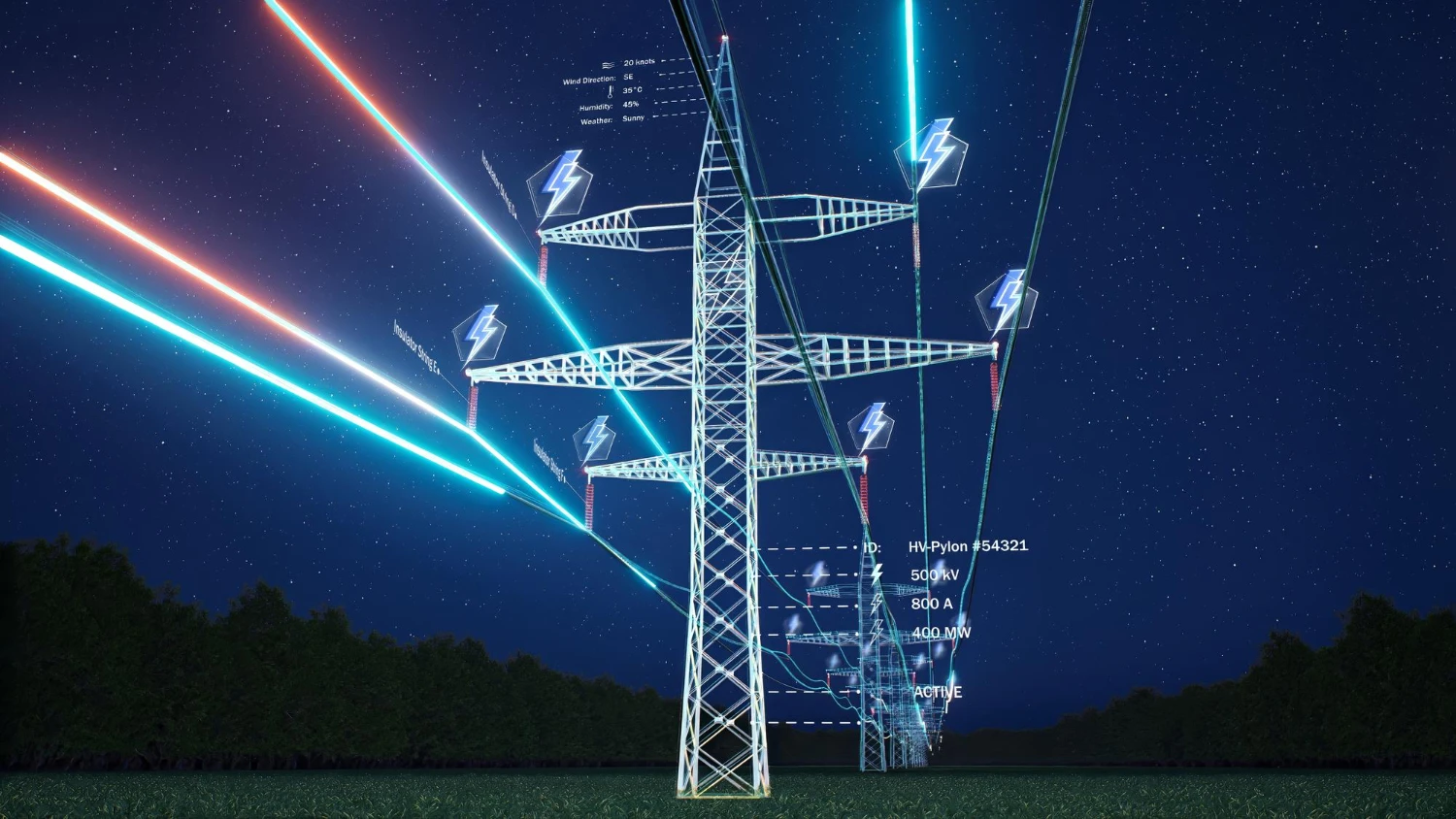
Energy infrastructure design
Not every project requires a highly sophisticated system straight away. It is worth first defining the objective, whether it is:
- reducing design time
- improving asset management
- collision detection
- preparing for modernisation
- construction supervision or subsequent maintenance
Only then are the tools selected. For one project, a point cloud and organised spatial data may suffice. For another, a 3D model with sector-specific data, documentation and integration with the schedule will be required. In large-scale projects, a phased approach is recommended: first, a survey; then a conceptual model; followed by construction and operational data.
In such a process, the experience of the project team (design services) is crucial; they must be able not only to collect data, but also to interpret it correctly and translate it into solutions that can be implemented on site. Technology alone cannot replace engineering decisions, knowledge of procedures and accountability for the outcome. Alterga operates in the field of the design, construction, modernisation and maintenance of power networks. Therefore, #AltergaTeam supports the investor from the phase of collecting field data through to the preparation of feasible solutions.
A new standard for investment planning
Modern design in the energy sector is increasingly starting with data, rather than assumptions made in isolation from the site. A digital simulation of the facility helps to organise information, minimise risks and better prepare technical decisions.
The best results are achieved by combining engineering expertise, up-to-date measurements, carefully selected tools and clear responsibility for the entire process. This ensures the project gets off to a solid start, and subsequent stages can be carried out more smoothly, without unnecessary delays, adjustments or misunderstandings.
FAQ – frequently asked questions about digital twins
It is a digital model of an object or part of a network, based on spatial, technical, survey and documentation data.
Not always to the same extent. For simple tasks, a basic inventory is sufficient, whereas for large substations, networks and modernisation projects, it is worth preparing a more comprehensive model.
The most commonly used sources include surveying measurements, 3D scanning, drone data, maps, technical documentation, information on equipment and measurement results.
Yes, because it allows you to compare the actual state of the facility with the documentation and detect collisions, installation constraints and data gaps at an early stage.
[1] https://www.pse.pl/-/projekt-nowego-planu-rozwoju-sieci-przesylowej-na-lata-2025-2034-uzgodniony
[2] https://www.energy.gov/oe/articles/smart-grid-security-and-resilience-project-receive-24m-doe